


Introduction
In December 2013, UNESCO officially inscribed the Chinese abacus (suanpan) onto the Representative List of the Intangible Cultural Heritage of Humanity. This ancient tool, often called "the fifth great invention of China," is now experiencing a new rebirth through mental arithmetic. More and more countries are discovering the remarkable potential of this method every year, and the main platform for exchanging experience and testing skills is the competitions organised by WAAMA – the World Abacus and Mental Arithmetic Association.
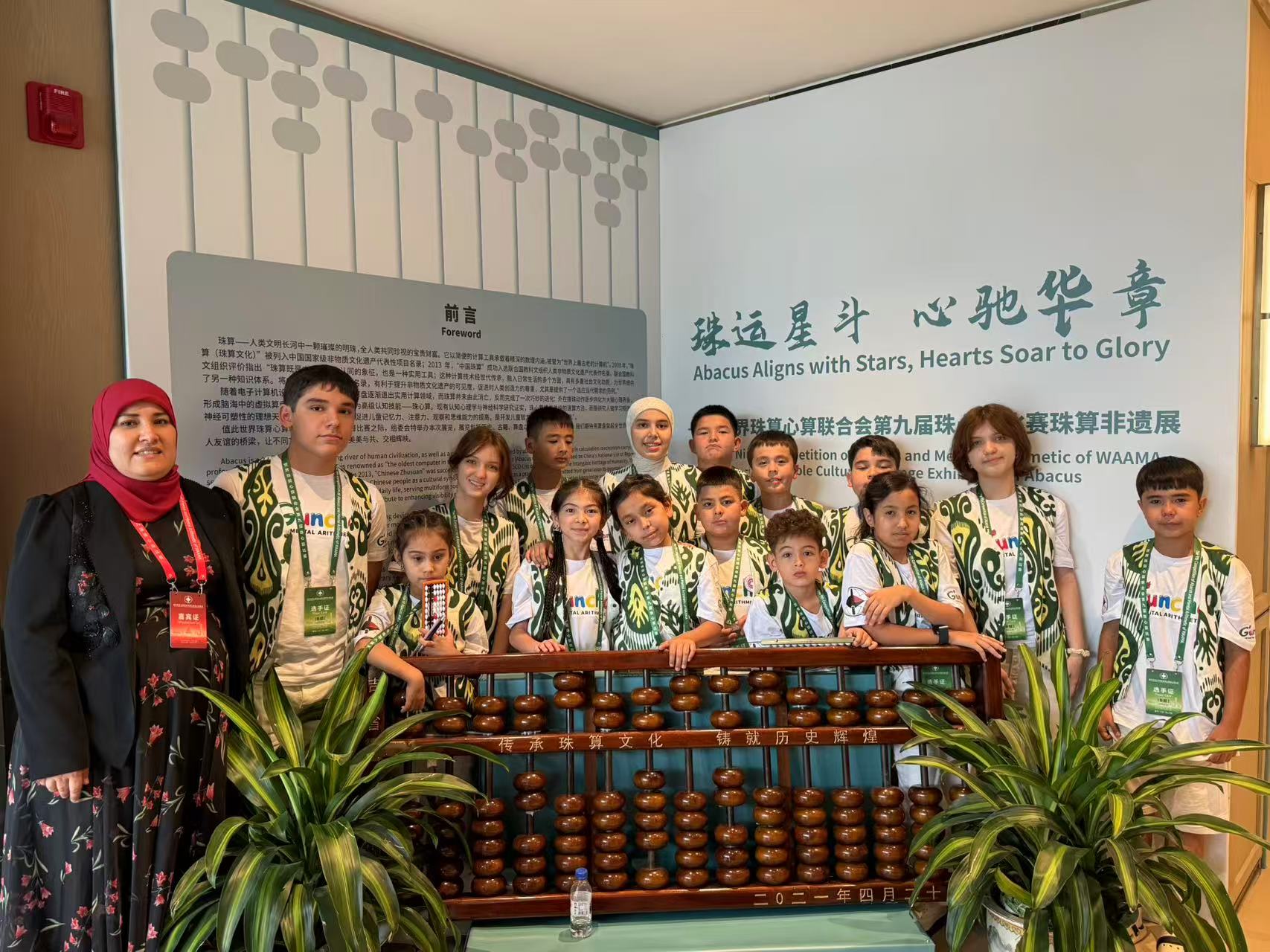
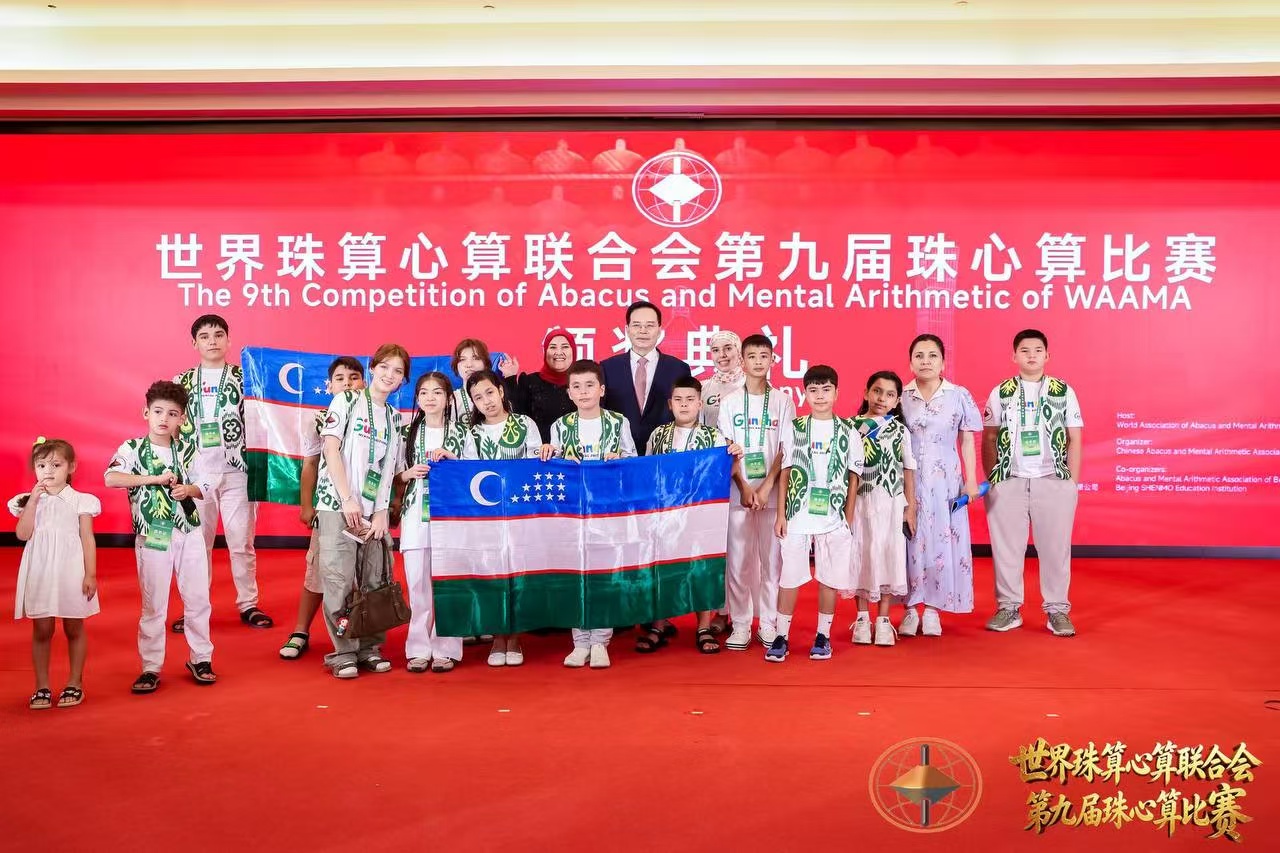
Our team from the "GUNCHA" mental arithmetic centre in Uzbekistan took part in the WAAMA Championship for the first time. We had ten years of experience in international and national tournaments and many awards behind us, but what we witnessed at this championship exceeded all expectations. It was not merely a contest – it was a challenge, a school, and a celebration all at once.
1. Our Path to WAAMA: The Challenge We Accepted
We learned that the WAAMA format was fundamentally different from the competitions we were used to just two months before the start. The rules turned out to be tough:
· 90 problems on addition and subtraction,
· 240 problems on multiplication,
· 240 problems on division,
and each block is given exactly 3 minutes.
At first, these numbers seemed unrealistic. We were used to more lenient time limits, but we decided to take the risk anyway. Intensive preparation began: five days a week, ten hours of training per day. The children worked at their maximum capacity, honing speed and accuracy. We knew the competition would be fierce, but we believed in our team.
When we arrived at the championship, we were greeted incredibly warmly – like old friends who had been long awaited. This friendly atmosphere instantly relieved the tension. We watched children from different countries easily solve 330 problems in 9 minutes – and we were finally convinced that the impossible was possible. From that moment, fear disappeared, leaving only the thrill of the challenge.
2. Impressions of the Championship: Organisation, Scale, and Emotions
WAAMA impressed us from the very first minutes. Perfect organisation, clear judging, well‑thought‑out logistics – everything worked like clockwork. But the most striking aspect was the level of the participants. The world's strongest teams gathered: from China, Japan, Malaysia, Indonesia, Russia, Kazakhstan, and many other countries. Every child was a real "living computer," with calmness and focus in their eyes.
The "GUNCHA" centre team performed with dignity:
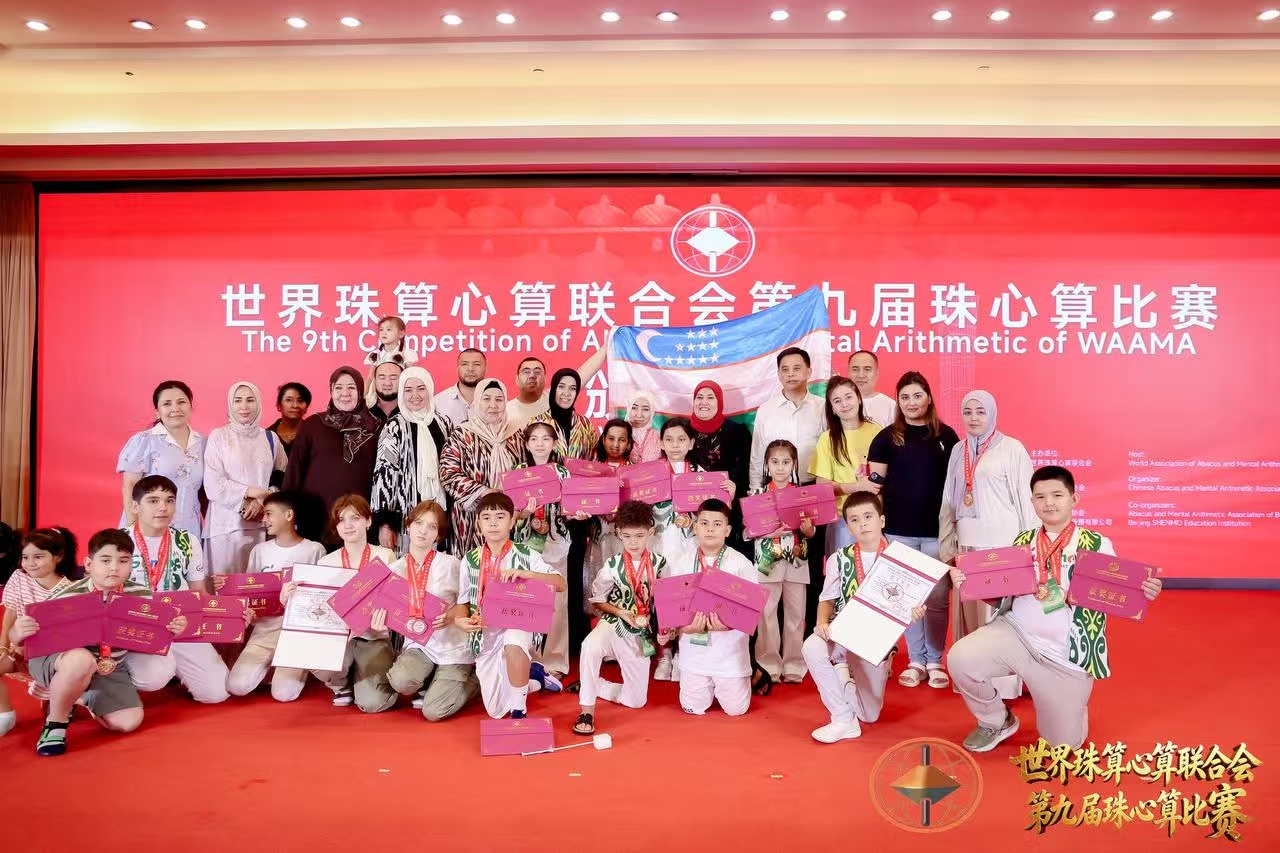
· individual standings – 1st, 2nd, and participation prizes;
· team standings – a prestigious 2nd prize.
We are proud to have represented Uzbekistan on such a distinguished stage. For us, WAAMA was not only a competition but also an opportunity to make new friends, communicate with world‑class educators, and exchange methods and ideas. Personally, I felt how profoundly mental arithmetic changes children – it develops not just counting skills but also character, willpower, and self‑confidence.
3. The Role of Mental Arithmetic in Child Development
Over the years of work at the "GUNCHA" centre, I have repeatedly seen that mental arithmetic is not simply fast calculation. It is a comprehensive brain trainer. Studies show that regular practice activates both hemispheres, improves memory, concentration, logical thinking, and imagination. Children become more focused, absorb school curricula more easily, and learn to make decisions quickly.
At WAAMA we saw the fruits of this method with our own eyes. Children solving hundreds of problems in just a few minutes demonstrated phenomenal stress resistance and the ability to hold large amounts of information in their minds. These skills will serve them in any area of life – from studies to future careers.
I am convinced that mental arithmetic is the key to raising a generation with flexible, quick, and creative thinking. WAAMA gives a powerful boost to its popularisation around the world.
4. The Abacus as Intangible Cultural Heritage: Preservation and Promotion
The inclusion of the abacus in the UNESCO list highlighted its global cultural significance. But heritage lives only as long as it is used. WAAMA plays a key role in this process – through competitions, certification standards, publications, and training.
We, the instructors of the "GUNCHA" centre, believe that it is important not only to teach the technique of calculation but also to tell about the history of the abacus, its philosophy, and its connection to Eastern culture. Our students know that the abacus is not just a counting board but a symbol of wisdom and diligence of many generations.
In our article, we plan to elaborate on how to integrate historical context into modern curricula, how to conduct open lessons for parents and teachers, and how to organise cultural exchanges between countries. WAAMA is already doing this, but the potential is still enormous.
5. Proposals for Improving Future WAAMA Championships
Based on our experience, I would like to offer several ideas that, in our opinion, could make the tournament even more engaging and beneficial.
(1). Workshops for teachers during the competition days. While the children compete, instructors could exchange methods, analyse typical mistakes, and learn from leading experts. Our "GUNCHA" centre would be happy to share its ten years of experience.
(2). Online broadcasts with expert commentary, so that parents and students from other countries can watch the process and learn.
Of course, the WAAMA format is already well‑honed, but we are confident that introducing new elements will only increase interest and attract even more countries.
6. Gratitude and a Look into the Future
We would like to express our special gratitude to the WAAMA Secretariat for the invitation, for the excellent organisation, and for the warm welcome. We felt like part of a large family united by a love for mental arithmetic and respect for cultural heritage.
We, the team of the "GUNCHA" centre, are returning home with a wealth of new knowledge, new friends, and a firm belief that mental arithmetic is the future of education. We will continue to train our children, strive for new heights, and will certainly come to the next championship – more experienced and even more motivated.
See you again, WAAMA!
Author: Khidoyatova Gulzoda Maratovna , "GUNCHA" Mental Arithmetic Centre, Uzbekistan